
 Posts


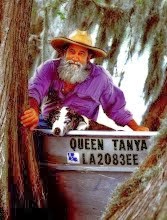
I have an article linked in below. It is about peoples dogs sufferring the loss of their master.
http://dogblog.dogster.com/2010/08/23/when-a-dog-loses-a-loved-one-an-interview-with-dr-michael-w-fox-2/
There is much we have to learn about these wonderful companions. One thing I am realizing is although dog may be mans best friend, we are not always dogs best friend, because there is so much chaos in the world we humans have created here on earth, that that the violence and neglect of humanity has a profound effect on sensitive people, and especially dogs who live and work for us.
Most people who call me to buy a dog operate under the assumption that they can "buy" a dog and be hunting with it tonite. They believe if it is a "good" dog it will hunt for anyone. Wrong!
Dogs are social creatures, in the wild, a pack, but in the human context, a tribe. So although you may want them only for hunting, and don't "need" them for anything else, they are not a tool that you can use and hang up or tie out until the next time you need them. They have emotional components that require socialization, and contrary to this concept that hunting dogs should not be spoiled as pets, I believe a happy well socialized dog makes a better hunter, because they are not neglected most of the time and are always eager to please and serve, because they are healthier, physically and emotionally.
If you buy a dog that you did not raise as a puppy, there is almost always a warm up period, where that dog needs to get to know you and trust you before they get down to the business of hunting.
Whether they live in a pack of dogs or a tribe of people, they want to fit in and find their place of service to the common good of the social unit. Most dogs are adaptable, and make their best effort to fit in if we want them to be a pet only. But some dogs are hunters and need to get out and cover some ground periodically exploring the world around them even if their only service to you is as a pet and companionship.
They are connected in ways most of us are unaware of. It seems many people have a hard time believeing a dog has emotions or feelings. Are these people blind? A dog may not speak English, but their body language speaks volumes.
The best way to really get to know your dog is to bring them into a variety of situations and see how the dogs reacts. This also builds relationship between you and the dog. Not everyone can bring their dog fishing, or to the deer hunting camp during deer season. But the more you broaden your dogs horizons the better, in my opinion.
Of course there are limitations to the complications encountered during deer season such as your dog stressing and barking when you leave them behind to go take a stand.
If you are in a box stand and you can bring your dog up in there with you, you may be amazed how helpful it is to have him in there while you spend all that time hoping for a shot at some venison. Then when it is all said and done, your blood dog is already there with you if you need him.
When my friends first began advising me that they brought their Catahoula into the box stand during deer season my first reaction was; wouldn't it scare the deer?
They advised me actually the dog helped, because it heard the deer coming before they did. Made me wonder how many deer passed under my stand and I didn't know it.
When it comes to hog hunting, many dogs are written off as "no good" because they are trying to figuire out what the hell we are doing in the woods, and hanging around our feet trying to get into the game and don't understand why we are so unhappy with them, and don't have a clue what we really want of them. Thats where positive reinforcement experiences come in to motivate and cause a dog to hunt hogs for us.
Now how you give that dog the positive experience of hunting hogs, and then allowing you to reward him for hunting, is the key a lot of people fail to have. Unless you can unlock that desire to serve you and combine it with the natural instinct to hunt, and then be able to reward the dog for a job well done, you may never know how "good" your dog really is. Possibly hunting with someone who has dogs that hunt the way you want to hunt. Or bring your new or started dog where there is a nuisance hog and your dog doesn't have to hunt very far out to get on it.
Now it helps to have a dog that was bred to hunt in the first place.
Unfortunately too many people today, are breeding dogs for pets, and for show.
In the old days it didn't matter how much you liked the dog or how good they looked, if they did not serve a vital function and work for their keep, they didn't survive to reproduce.
Today, because so many people are getting dogs bred to hunt and are trying to make them into a pet, and it doesn't work out because the dogs natural hunting instincts get in the way of just being a pet, they don't survive to reproduce.
What is happening is called genetic selectivity, and when we breed for show or for easy going, fun pets, we lose the drive that makes these dogs sought after the world over for their hunting abilities.
I see it all the time, and I have people on the phone hang up on me because, I am trying to help them understand you can't take the hunt out of them if they are bred to hunt, and you can't make them hunt either, if they don't have it in them genetically to start with.
It is really starting to disturb me when I hear people claim they want to buy a puppy, and then train them to hunt hogs. Disturbs me, because they don't understand you don't have to train them to hunt, if they are bred to hunt. You have to train them to come, sit, stay, load up, not to mention the fine tunings of socializing with other dogs and people. And if you are hunting hogs, you need to train them to survive.
I have puppies that are 12-14 weeks old that are hammering down in a bay pen, and I am thinking I better teach them to survive or they won't live to be two. And more importantly, I need to teach people the importance of using only one or two dogs at a time if they are bred right. Because if they are bred right, they don't need help, they need space and no distractions when the bay gets going in the woods.
Dogs that get to a bay and have too much help, get catchy, cut up too much, or killed, before you can get there to throw and tie the hog.
Well it has been a long hot summer, and I am glad the days are shorter, the nights cooler,and we have dryer air making the days a little more tolerable.
As much as I had hoped to do more hunting in the grainfields this summer, the BP oilspill has minimised my income to the point, I couldn't fill up the gas guzzler and chase hogs as much as as I had hoped. But the tourists did pour in during the last month and we are getting out more with cooler temps, so nice to be out burning up some of the calories I have stored around my waistline these last few months, sitting in the central AC nearly everyday, and night.
Tuesday, August 31, 2010
Monday, August 9, 2010
They Are Starting To Call Me A Dog Whisperer
Today's post is about the Crocodile Whisperer.
Most people who come on my Louisiana Swamp Tours do not believe me when I tell them I swim with the gators, me and my children. We can swim with them because we eat them, they don't eat us. We are their only natural enemy, and they have nothing to fear except human beings.
What you are about to see here is even harder to believe. But is proof that animals are more adaptive than most of us believe.
And I have been trying to figuire out how to drive my point home to my readers about the finer aspects and benefits of buying a Catahoula puppy and spoiling it rotten for the first six months if you plan to raise it to be a hog hunting dog.
The point of getting a foundation bred puppy is it will hunt because it is bred into the gene pool, generation after generation, but because of the wolf instinct in these dogs they are highly social, and that means they need to feel that they are a part of the family or pack. There is no better way to achieve the relationship factor than buying a puppy and spending years before they are allowed to hunt.
Bobby Girl, who is a granddaughter of Bob and a great granddaughter of Two Diamonds Cutter, will not bay in a pen. But first time I tokk her to the woods at about 7 months old she was gone. She hunted.
Many people fail to grasp the importance and thus the concept of relating to animals and I see this in my dog business all the time. Not only do they underestimate the animals intelligence, but also the emotional or spiritual connections possible.
Of course, what I am describing takes time to cultivate, because animals, wild or domestic often are painfully aware that we are the worlds most dangerous predator, are grossly impatient, insensitve and selfish, not to mention we mistakenly believe we are superior to animals and thus are puffed up with pride, rude, loud and arrogant.
Wild animals hate that and domestic ones such as the family pet, do their best to adapt and tolerate us!
If the shoe fits, wear it!
I am tired of being nice and polite to people who don't deserve it.
Below is a perfect example of the possibilities and benefits of investing time in relating to a wild animal and developing a long term working relationship.
Rather than trying to tame wild stallions,
fearless Costa Rican fisherman Chito prefers a playful wrestle,
in the water with his best pal Pocho - a deadly 17ft crocodile.

The 52-year-old
daredevil draws gasps of amazement from onlookers by wading chest-deep into
the water, then whistling for his 980lb buddy - and giving him an affectionate hug.

Chito made friends
with the croc after finding him with a gunshot wound on the banks of the
Central American state's Parismina river 20 years ago.
He had been shot in
the left eye by a cattle farmer and was close to death.
But Chito enlisted the
help of several pals to load the massive reptile into his boat.
He says: "When I
found Pocho in the river he was dying, so I brought him into my house
"He was very
skinny, weighing only around 150 lb. I gave him chicken and fish and medicine
for six months to help him recover.
"I stayed by
Pocho's side while he was ill, sleeping next to him at night. I just wanted
him to feel that somebody loved him, that not all humans are bad.
"It meant a lot
of sacrifice. I had to be there every day. I love all animals - especially
ones that have suffered."
It took years before
Chito felt that Pocho had bonded with him enough to get closer to the animal.

He says: "After a
decade I started to work with him. At first it was slow, slow. I played with
him a bit, slowly doing more.
"Then I found out
that when I called his name he would come over to me."
At one point during his
recovery, Chito left the croc in a lake near his house.. But as he turned to
walk away, to his amazement Pocho got out of the water and began to follow
him home.
Chito recalls:
"That convinced me the crocodile could be tame." But when he first
fearlessly waded into the water with the giant reptile his family was so
horrified they couldn't bear to watch. So instead, he took to splashing
around with Pocho when they were asleep..
Four years ago Chito
showed some of his tricks to friends, including getting the animal to close
his eyes on command, and they convinced him to go public with a show.

Now he swims and plays
with Pocho as well as feeding him
at the lake near his home in the lowland
tropical town of Sarapiqui .

The odd couple have now become a major tourist attraction,
with several tour operators,
including Crocodile Adventures, taking visitors on touring cruises to see the pair.

On the Crocodile Adventures website it describes the spectacle as:
"One of the most amazing things that no cruise ship passenger will want to miss, the adventure show between the man and the crocodile."


Tuesday, August 3, 2010
The Right Genetics and Training
Someone recently saw my wolf at a hog dog field trail with my Catahoulas and asked "What is that for?" And I answered; "My daughter." It caused me to realize how people look at you and they think they know all your business.
Anyway, he did bay the hog after he was at my house for a few weeks and when I thought about it, I realized he had a built-in cut vest, on account of his fur was so thick. At any rate he does hunt and so we will see come cooler weather, what he is made of.
 Samuel, my daughter's wolf pup. That's right, he ain't finished growing yet!
It fascinates me how so many people think they can go to baydog.com and buy a cheap dog and voila: catch hogs!
Well, I hope to add some in-depth truth to the cypershere regarding buying, breeding, training, and owning Catahoulas, for hog hunting, blood trail dogs, and just plain relating better to your pet or working dog which ever way you prefer to go with it.
It is amazing how many people "see" a Catahoula and want one and then try to "make" it into a pet, and it doesn't work because the dogs working ability is bred into them, not trained. And if you are not prepared to own something that will put you to school on a daily basis, test you, and is smarter, faster, and more playful than you, watch out these dogs will drive you nuts.
More and more people are reading my blogs and realizing most of the info on the internet about blood trail dogs for deer and Catahoulas for hog hunting is all about somebody bragging how great a hunter they are and how long the teeth or how big the rack, and is thus not very useful for novices or serious experienced hunters trying to take their hunting experiences to new new levels with a good, well bred dog.

Well I am here to tell you folks, I don't hunt, my dogs do. And all the credit of my success in the woods goes to them for being the great hunters, not me! Part of this is genetics and part is due to them being allowed to grow up to be puppies for two years and balance the work with play. But I have special techniques and knowledge that is evident in the end products. Ask my satisfied customers: Here is an old timer named Mike Duggan telephone 337 912 3953. Let him tell you about the puppy he bought that was finding hogs at 8 months, not to mention what has happened so far and the dog is not even two years old.
 This Buster, mr. Mike's dog and perfect example of the right genetics.
Now what is so interesting about Mr. Mike's dog is it was only a year old and all kind of people wanted to breed to him, but he was too young so Mike suggested they breed to where he come from. Jesse the stud, or Jesse's grandfather C Arrow Patch. Oh no, they wanted to breed to Buster, and he was barely a year old. Like he is some kind of freak that come out of nowhere. And you know the problem with that kind of thinking? Unless he comes from generation after generation of proven foundation bred dogs, he will most likely not produce anything after him.
 Here is Buster's father, Jesse and his son Gus, out of Dot, in the pen.
 Here is Luke Skywalker, a paternal grandson of the legendary Maurice, and maternal grandson of Patch and Ruby.
You can see below how the mommas teach the young ones how it is done in a baypen and more specifically they teach my dogs to hunt in the woods by example. I don't train my dogs to hunt, I breed them to hunt and I train them to survive when we get to the woods.

Now, I do allow them to get in and get them some, when I think they are ready, but by about 8 or 9 months, it is time to keep them away from the bay pen and focus on the woods.
If you bring them to the pen and never to the woods as they grow up they come to believe it is your job to take them to hogs and then they bay it.
After a year old it is very important to focus the dogs primarily into the woods as much as possible, rather than the bay pen so they come to realize that if they want to bay a hog, they have to go find one, or it doesn't happen. and by that point, they should really be fired up on baying if they are bred right, but many a great dog was a late bloomer, and really surprised folks how overnight someone turned on the fearless switch, and they fired off.

So many people struggle to get the dogs out from under foot, and getting to the point of the dogs firing off, getting out and hunting hogs. I think they do not understand the importance of simply walking the dogs away from the truck or ATV, and through the woods as a puppy and allowing the dog to grow up gradually expanding its territory, and perhaps, I think sometimes it is a matter of impatience on the hunters part, expecting too much too soon. And I want to mention this again; or other times it is a clear cut case of the late bloomer, no matter who, what, where, the dog will not hunt until 2 or 3 years old. And most people write them off before that, thinking they are not a hunting dog, or they would be hunting already.

One thing I know for sure; my dogs look up to me for leadership, and are studying my every move and if I take them to the woods and there is hogs there, they will find it and bay it, if they can stop it, because that is what they were bred to do generation after generation.

Good luck, and be careful, it's a jungle out there.
If you are coming to Louisiana and want to do my swamp tour or would like to call me about a de la Houssaye's Catahoula, I can be reached at 337 298 2630
Anyway, he did bay the hog after he was at my house for a few weeks and when I thought about it, I realized he had a built-in cut vest, on account of his fur was so thick. At any rate he does hunt and so we will see come cooler weather, what he is made of.
 Samuel, my daughter's wolf pup. That's right, he ain't finished growing yet!
It fascinates me how so many people think they can go to baydog.com and buy a cheap dog and voila: catch hogs!
Well, I hope to add some in-depth truth to the cypershere regarding buying, breeding, training, and owning Catahoulas, for hog hunting, blood trail dogs, and just plain relating better to your pet or working dog which ever way you prefer to go with it.
It is amazing how many people "see" a Catahoula and want one and then try to "make" it into a pet, and it doesn't work because the dogs working ability is bred into them, not trained. And if you are not prepared to own something that will put you to school on a daily basis, test you, and is smarter, faster, and more playful than you, watch out these dogs will drive you nuts.
More and more people are reading my blogs and realizing most of the info on the internet about blood trail dogs for deer and Catahoulas for hog hunting is all about somebody bragging how great a hunter they are and how long the teeth or how big the rack, and is thus not very useful for novices or serious experienced hunters trying to take their hunting experiences to new new levels with a good, well bred dog.

Well I am here to tell you folks, I don't hunt, my dogs do. And all the credit of my success in the woods goes to them for being the great hunters, not me! Part of this is genetics and part is due to them being allowed to grow up to be puppies for two years and balance the work with play. But I have special techniques and knowledge that is evident in the end products. Ask my satisfied customers: Here is an old timer named Mike Duggan telephone 337 912 3953. Let him tell you about the puppy he bought that was finding hogs at 8 months, not to mention what has happened so far and the dog is not even two years old.
 This Buster, mr. Mike's dog and perfect example of the right genetics.
Now what is so interesting about Mr. Mike's dog is it was only a year old and all kind of people wanted to breed to him, but he was too young so Mike suggested they breed to where he come from. Jesse the stud, or Jesse's grandfather C Arrow Patch. Oh no, they wanted to breed to Buster, and he was barely a year old. Like he is some kind of freak that come out of nowhere. And you know the problem with that kind of thinking? Unless he comes from generation after generation of proven foundation bred dogs, he will most likely not produce anything after him.
 Here is Buster's father, Jesse and his son Gus, out of Dot, in the pen.
 Here is Luke Skywalker, a paternal grandson of the legendary Maurice, and maternal grandson of Patch and Ruby.
You can see below how the mommas teach the young ones how it is done in a baypen and more specifically they teach my dogs to hunt in the woods by example. I don't train my dogs to hunt, I breed them to hunt and I train them to survive when we get to the woods.

Now, I do allow them to get in and get them some, when I think they are ready, but by about 8 or 9 months, it is time to keep them away from the bay pen and focus on the woods.
If you bring them to the pen and never to the woods as they grow up they come to believe it is your job to take them to hogs and then they bay it.
After a year old it is very important to focus the dogs primarily into the woods as much as possible, rather than the bay pen so they come to realize that if they want to bay a hog, they have to go find one, or it doesn't happen. and by that point, they should really be fired up on baying if they are bred right, but many a great dog was a late bloomer, and really surprised folks how overnight someone turned on the fearless switch, and they fired off.

So many people struggle to get the dogs out from under foot, and getting to the point of the dogs firing off, getting out and hunting hogs. I think they do not understand the importance of simply walking the dogs away from the truck or ATV, and through the woods as a puppy and allowing the dog to grow up gradually expanding its territory, and perhaps, I think sometimes it is a matter of impatience on the hunters part, expecting too much too soon. And I want to mention this again; or other times it is a clear cut case of the late bloomer, no matter who, what, where, the dog will not hunt until 2 or 3 years old. And most people write them off before that, thinking they are not a hunting dog, or they would be hunting already.

One thing I know for sure; my dogs look up to me for leadership, and are studying my every move and if I take them to the woods and there is hogs there, they will find it and bay it, if they can stop it, because that is what they were bred to do generation after generation.

Good luck, and be careful, it's a jungle out there.

If you are coming to Louisiana and want to do my swamp tour or would like to call me about a de la Houssaye's Catahoula, I can be reached at 337 298 2630
Subscribe to:
Posts (Atom)